| Description:
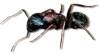
The black carpenter ant, Camponotus pennsylvanicus, in the east
and C. modoc in the west are the most thoroughly studied species
in the United States. Other species of Camponotus are distributed
throughout the country. Carpenter ants are among the largest ants
found in the United States, ranging from 1/8- to 1/2-inch long,
the queens are slightly bigger. The workers of an established
colony vary in size. They are commonly black; however, some species
are red and block, solid red, or brown in color. They have one
node in the petiole and a circle of tiny hairs on the tip of the
abdomen. Their thorax is evenly rounded when seen from the side.
Habits:
Carpenter ants are social insects that usually nest in wood.
They commonly excavate galleries or tunnels in rotting or sound
trees and, in structures, readily infest wood, foam insulation,
and cavities. They prefer to excavate wood damaged by fungus
and are often found in conjunction with moisture problems.
The workers excavate the nest, forage for
food, and care for the young. Carpenter ants feed on sugar solutions
from honey dew-producing insects such as aphids, sweets, and
the juices of insects they capture. They do not eat the wood
as they excavate their nests. They actively feed at night well
after sunset continuing through the early morning hours. Foraging
trails may extend up to 300 feet and, upon close inspection,
can be seen on the ground as narrow worn paths.
Carpenter ants enter structures through gaps
or cracks while foraging for food. However, the appearance of
large numbers of winged adults inside a structure indicates
that the nest(s) exists indoors. The workers push wood shavings
and pieces of foam insulation out of the nest through slit-like
openings in the surface of the wood or other nesting site material.
This material, which may contain fragments of other insects,
and structural moisture problems are things to look for when
trying to locate a colony in an infested structure. Rustling
sounds in wall voids are another indication that there is a
colony in the area.
|