| Description:
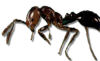
Fire ant workers vary in size, ranging from l/16- to 1/4-inch
long and are yellow to dark red-brown. The thorax lacks spines,
and the petiole has two nodes. They have a stinger at the tip
of the abdomen and ten. segmented antennae, which is tipped with
a two-segmented club.
Habits:
Several species of Solenopsis are called, fire ants, because
of the fiery pain their stings inflict upon the victim. These
ants usually nest in the ground but can develop colonies in
structures, especially in areas near the soil. They are attracted
to electrical junction boxes, such as air conditioners and traffic
signals. When nesting in the soil, they build large, unsightly
mounds which are a detriment to cultivation of fields. Some
species of fire ants nest in typical ant habitats, such as under
stones, landscape timbers, in voids and around foundations.
These ants, and especially the red imported
fire ant, Solenopsis invicta, have tremendously large colonies
that can severely injure crops, lawns, young birds, and people.
Fire ants prefer high protein foods but will feed on practically
everything, including other insects, honeydew, seeds, fruit
juices, nectar, plants, nuts, cereals, butter, grease, and meats.
They also gnaw on electrical wiring and clothing, especially
if it is soiled.
|