| Description:
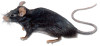
The roof rat is a commensal (i.e., living in close association
with humans) rodent. The head and body are six to eight inches
long and the tail is an additional seven to ten inches. It has
a slight body which weighs five to nine ounces. The fur is soft,
smooth, and brown in color with some black hairs. The muzzle is
pointed, eyes and ears are large, and the scaly tail, which is
uniformly dark, is longer than the head and body combined. Roof
rat droppings are up to 1/2-inch long and spindle-shaped with
pointed ends.
Habits:
Rats are nocturnal. They are shy about new objects and very
cautious when things change in their environment and along their
established runs. Outdoors, roof rats prefer to nest in trees
and, occasionally, in burrows and vegetation. The rats easily
enter buildings through 1/2-inch and larger gaps. In buildings
they prefer to nest in the upper levels of the building, and,
occasionally, in basements and sewers. They prefer foods such
as fruits, vegetables, and cereals. Their foraging range is
100 to 150 feet from their nest.
Rats are associated with various diseases and occasionally bite.
Plague is of little concern because it has not occurred in rats
in the United States for many years. However, leptospirosis
is vectored by rats, and, thus, is a disease of great concern.
This disease is acquired by eating food and drinking water which
are contaminated with infected rat urine. Rats also cause significant
structural damage and product destruction.
|